This was a harder topic to look at the history of ICT in Early Childhood Education
After a lot of discussion I have done and thinking outside the original topic I have come up with the
HISTORY OF COMPUTERS
Lots of reading later I can now give a time line of computer history with points that are relevant to Early Childhood Education.
1939 - Hewlett- Packard was founded. The first product they produced was used in 12 movie theatres the showed the Disney movie "Fantasia"
 |
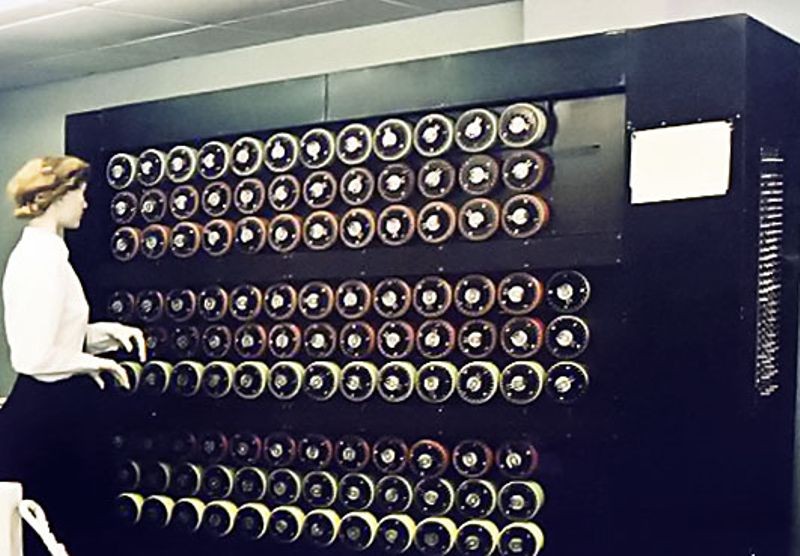
| The First Bombe computer. |
1942 - The first Bombe is completed - This machine was used to decrypt the Nazi ENIGMA based-military communications during world war II.
1943 - ENIAC used panel-to-panel wiring and switches for programming, occupied more than 1,000 square feet, used about 18,000 vacuum tubes and weighed 30 tons. Because the ENIAC was electronic it was 1000 times faster than any computer of it's time.
1944 - The Harvard Mark 1 is completed - This machine was a room sized relay-based calculator.
1948 - First computer programme to run on a computer. It had seventeen instructions and ran on June 21st at the University of Manchester.
1951 - The first Univac 1 was delivered to the U.S. Census Bureau. This machine used 5,200 vacuum tubes, weighed 29,000 pounds or roughly 11,600 kilos. Forty six of these machines where sold costing over $1 million (U.S dollars) each.
.
1955 - The first key-board was used for direct input in February. Five months later MIT confirmed that the keyboard input device was both convenient and useful.
1958 - MIT reseachers built the first TX-o this was the first general-purpose programmable computer built with transistors. For easy replacement, designers placed each transistor circuit inside a "bottle," similar to a vacuum tube.
 |
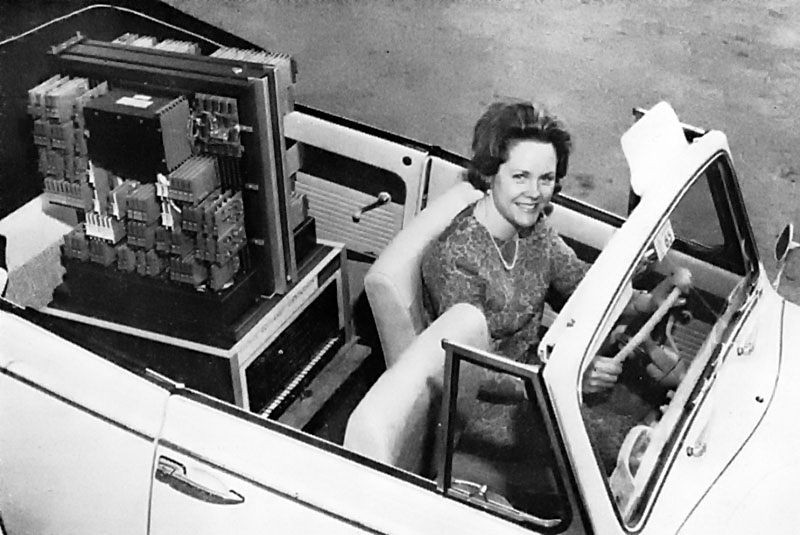
PDP-8
|
1965 - This computer was designed to monitor the reactor in a nuclear lab. It was a compact general purpose computer. Later the PDP-8 was made for commercial use and sold thousands to manufacturing plants, small businesses and scientific laboratories. The cost for the PDP-8 was $18,000 (U.S. Dollars)
1967 - The first electronic typewriters were available. for roughly $700. These were considered the first micro computers.
1970 - Digital Equipment Corporation designs the Nova mini computer. It contained 32KB (kilobytes) of memory and cost $8,000. This computer later influences the systems like Xerox Alto and Apple 1.
 |
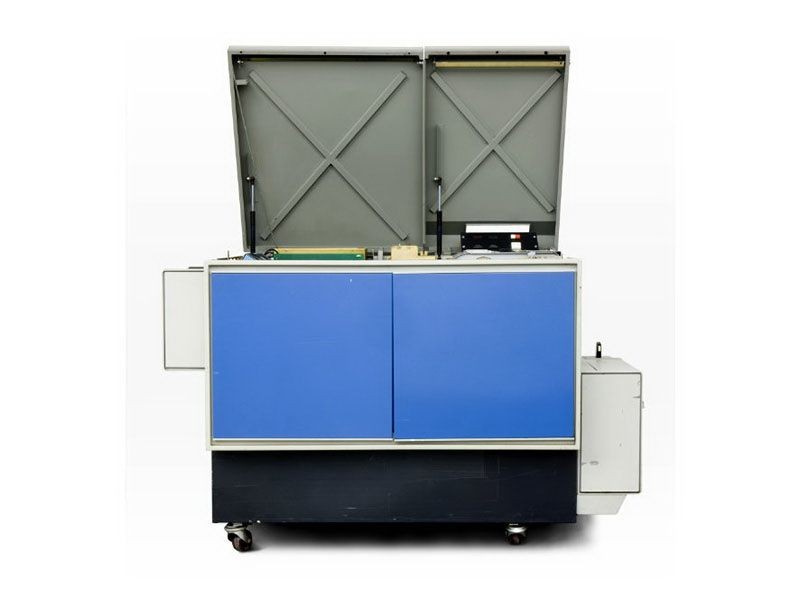
| The Dover Laser Printer. |
1973 - Xerox invented the first Laser Printer. It was a light sensitive machine. This has the worlds first laser printer which has generated billions of dollars in revenue for Xerox
1977 - Apple-I was completed. Becoming the first in the Apple company line
1977 - Apple-II was introduced. This was the first of personal computers. Apple gave away thousands of these computers to schools. Millions of these computers were sold between 1977 and 1993. This is the longest lived personal computer sold to date.
 |
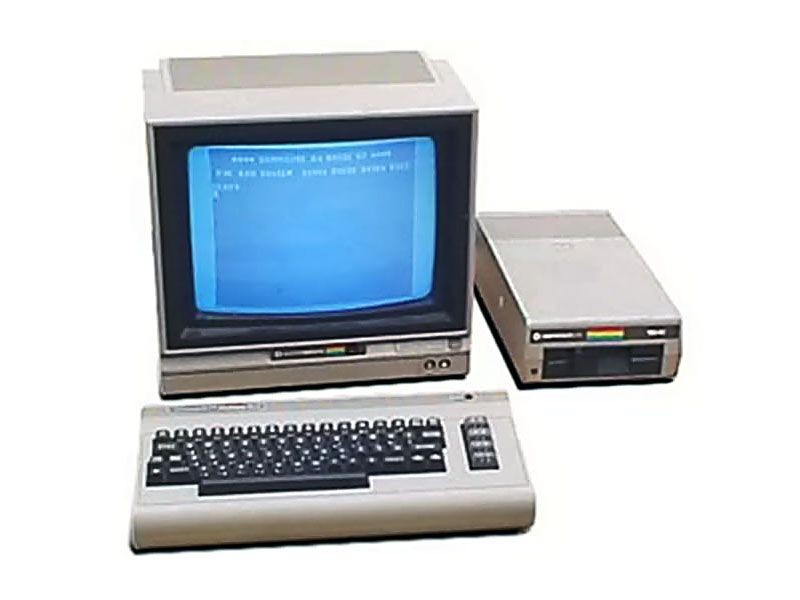
| Commodore 64 (C64) |
1981 - Commodore computers introduced the C64. It sold for $595 and was sold for 12 years and over 22 million were sold. In 2006 it entered the Guinness Book of World Records, being the greatest selling computer of all time.
1982 - IBM introduces it's Personal computer.
1984 - Apple launched the first Macintosh (mac) computer during the superbowl in 1984. Priced at $2,500 It included a mouse and came included programmes MacPaint, MacWrite.
 |
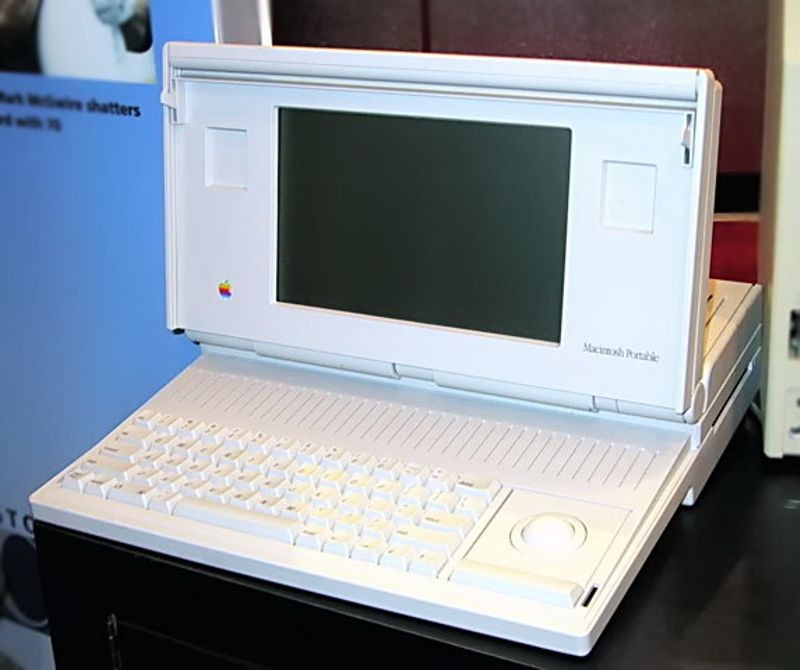
| First Macintosh portable computer |
IBM introduced the PC Jr. as a home computer selling for about $4,000.
1986 - Compaq introduced it's Deskpro 386.
1989 - Macintosh introduces the first portable computer. It was considered heavy at sixteen pounds or 6.4 kilograms. Was expensive at $6,500 (U.S. dollars). It did not sell as well as expected and was withdrawn from the market after 2 years.
1992 - Apple releases the first hand held computer. It had handwriting recognition software but did not work as well as anticipated again being discontinued after a few years.
Early 90's - The cell phone arrived. By 1992/3 these where part of most businesses including in New Zealand
From here on the computer explosion starts.
1996 - First palm pilot was sold.
2000 - First camera phone was introduced. It was 0.11 megapixels and had 256-colour display. Camera phones became a significant part of all cell phones within a few years.
 |
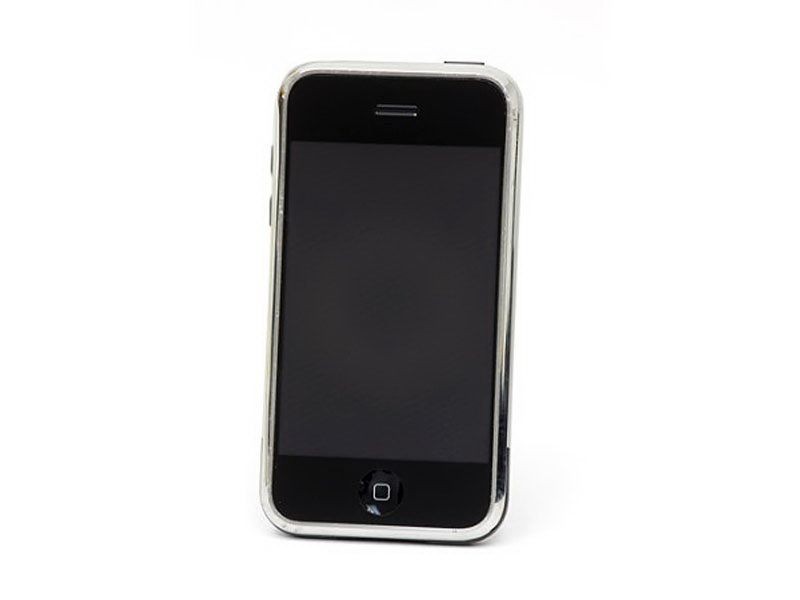
| Apple iPhone |
2007 - Amazon released the Kindle. An electronic reader. Later versions include an audio reader. It was also capable of having increased storage.
2007 - The release of the iPhone. The first web browser, music player and cell phone.
2008 - Apple introduced the MacBook Air. It light, thin laptop with a high-capacity battery.
2011 - The I-Pad is released. It has wi-fi, audio-video capabilities.
2013 - Kidicorp/Beststart roll out 16 centres in a trail with I-Pads.
By 2014 this is released to all centres if they can complete the modules. By 2016 several centres have taken this offer and now have I-Pads for every teachers.
Above is the time line of relevant points.
What does this mean for Early Childhood Education?
While reading about the history of computers I found it interesting that it did not mention software as much as I though it would. Personally I think it is interesting that in our centres or the ones that I have worked at, you will find window systems in our offices which we are expected to do our work on but they are now introducing the Apple iPads which are not compatible with these. So does it mean that we will be changing to Apple computers in the future?
You can find more by going to the links below.
Invention of the Personal Computer.
Since posting this page I have found another timeline that is in simpler language which also talks about the software systems that are used.
Live Science computer history